


Every Purifier Cleans the Room. None of Them Protect You.
Here is the fundamental problem with every air purifier ever made: they all mix the air. Air is drawn in from one side, filtered, then expelled back into the same room—where it immediately mixes with the unfiltered air around it. Turbulence does the rest.
By the time that cleaned air travels across the room to reach your pillow, it has fully mixed with dirty room air again. You are breathing the same polluted air as before—just slightly less of it. The room is cleaner. Your breathing zone is not.
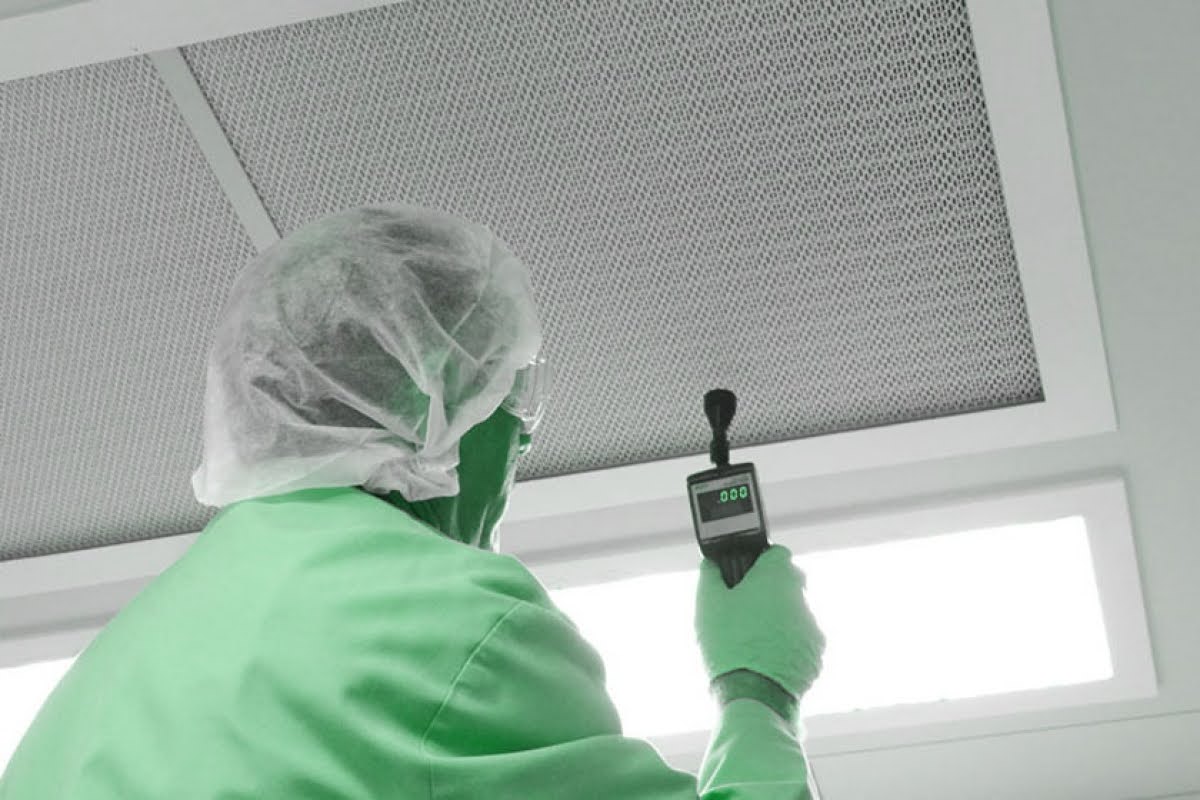
AirTulip Delivers 1,000× Cleaner Air
AirTulip Sleep is built into the headboard directly behind you. It draws air through dual industrial HEPA H14 filters—the same grade used in pharmaceutical cleanrooms, capturing 99.995% of particles at 0.3 microns—then delivers it as a controlled laminar stream.
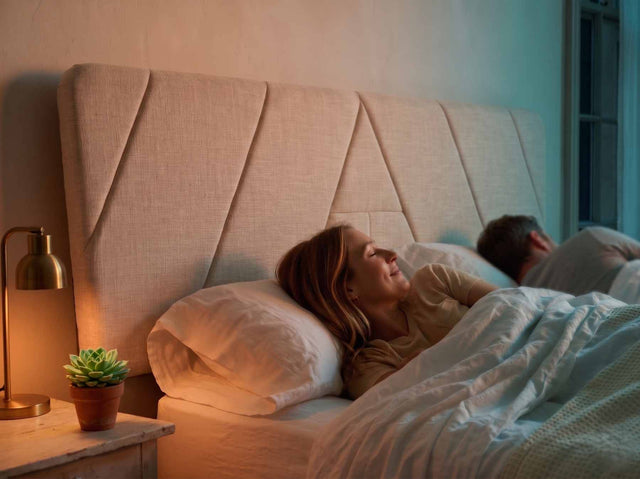
Laminar flow is single-direction, ultra-low-turbulence airflow. It does not mix. It does not swirl. It flows in one precise direction—over you, around your pillow, around your body—forming a stable, particle-free bubble while you sleep. The air inside that bubble is up to 1,000× cleaner than what a conventional purifier achieves at the pillow.
This is not a better purifier. It is a different category entirely.





Behind The Invention
Laser labs, acoustic chambers, and hand assembly in New York and Detroit—see how each AirTulip Sleep headboard is built to a standard, not a price point.
Inside Your Clean-Air Headboard
Explore how laminar delivery, industrial filtration, and American hand assembly work together—without leaving the product page.

Hover or tap each point to explore
Research from Cambridge, Tsinghua & Sleep Cycle
The Link Between Air Pollution And Nighttime Coughing.
A study spanning 32 cities linked higher levels of outdoor fine-particle pollution with more frequent coughing at night.1
2.4%
More nighttime coughing
Associated with each 10 µg/m³ increase in outdoor PM₂.₅ concentration.1
32 cities across 12 countries. Approximately 500 days of observations.
How The Study Worked
Researchers combined city-level air measurements with anonymized cough counts from Sleep Cycle, then tested whether daily changes were related.1
-
Measure Outdoor Air
Monitoring stations supplied daily concentrations of PM₂.₅ for each city.
-
Count Nighttime Coughs
The app detected coughing during sleep recordings. Researchers calculated coughs per recorded hour and grouped the data by city and day.
-
Compare The Patterns
Statistical models accounted for weather and influenza activity. City-level results were combined to estimate the overall association.
Small Particles. A Measurable Association.
PM₂.₅ refers to fine airborne particles no more than 2.5 micrometres in diameter. The study examined outdoor concentrations, rather than measuring the air beside each participant’s bed.1
The Link Extended To Lower Pollution Levels.
The researchers also detected associations below the WHO’s 24-hour PM₂.₅ guideline. The findings suggest nighttime coughing can respond to changes in air pollution even at relatively low concentrations.1

Inspired By Nature
Most noise specs are measured in ideal lab conditions with no real product accountability. We went further. AirTulip Sleep was tested in a purpose-built acoustic enclosure—an industry-standard anechoic environment that isolates and measures every frequency the unit produces.
In Whisper mode, AirTulip Sleep measures 26 dB(A)—below the threshold of conscious awareness during sleep. Night mode runs at 30 dB(A), quieter than a library. This is not a claim. It is a measured, validated result from a controlled acoustic environment.
Inspired by the silent flight of owls, we applied serrated blade-edge geometries to our fan impellers—the same biomimicry that lets owls fly without detectable sound. Combined with 3D-printed acoustic foam pathways and a structural honeycomb core, every noise path is addressed at the source.
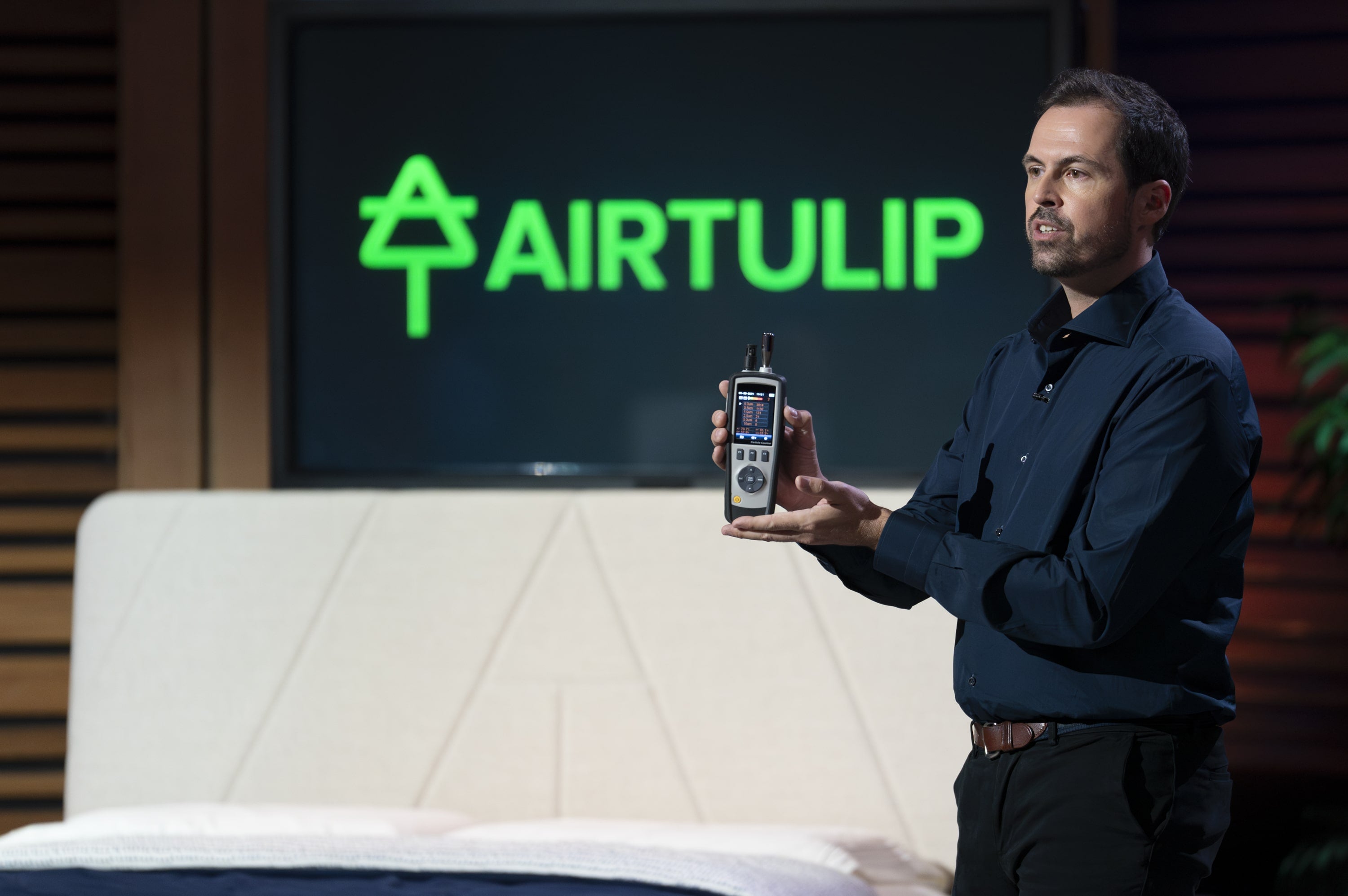
Built by an Aerospace Engineer Who Grew Up in Cleanrooms.
Arjen de Jong holds a PhD in aeroacoustics and has shaped airflow at the highest levels—from Porsche and Ferrari to NASA-adjacent programs. Long before that, he grew up in a family business that built industrial cleanrooms. He understood how to control air before most engineers learned to model it.
During the pandemic in New York, Arjen set up laser imaging systems in bedrooms—the same visualization equipment used in jet engine labs—and watched what air actually does while people sleep. What he saw made the problem impossible to ignore: every purifier was failing at the only moment that matters. He built AirTulip from scratch to fix it.
What People Experience
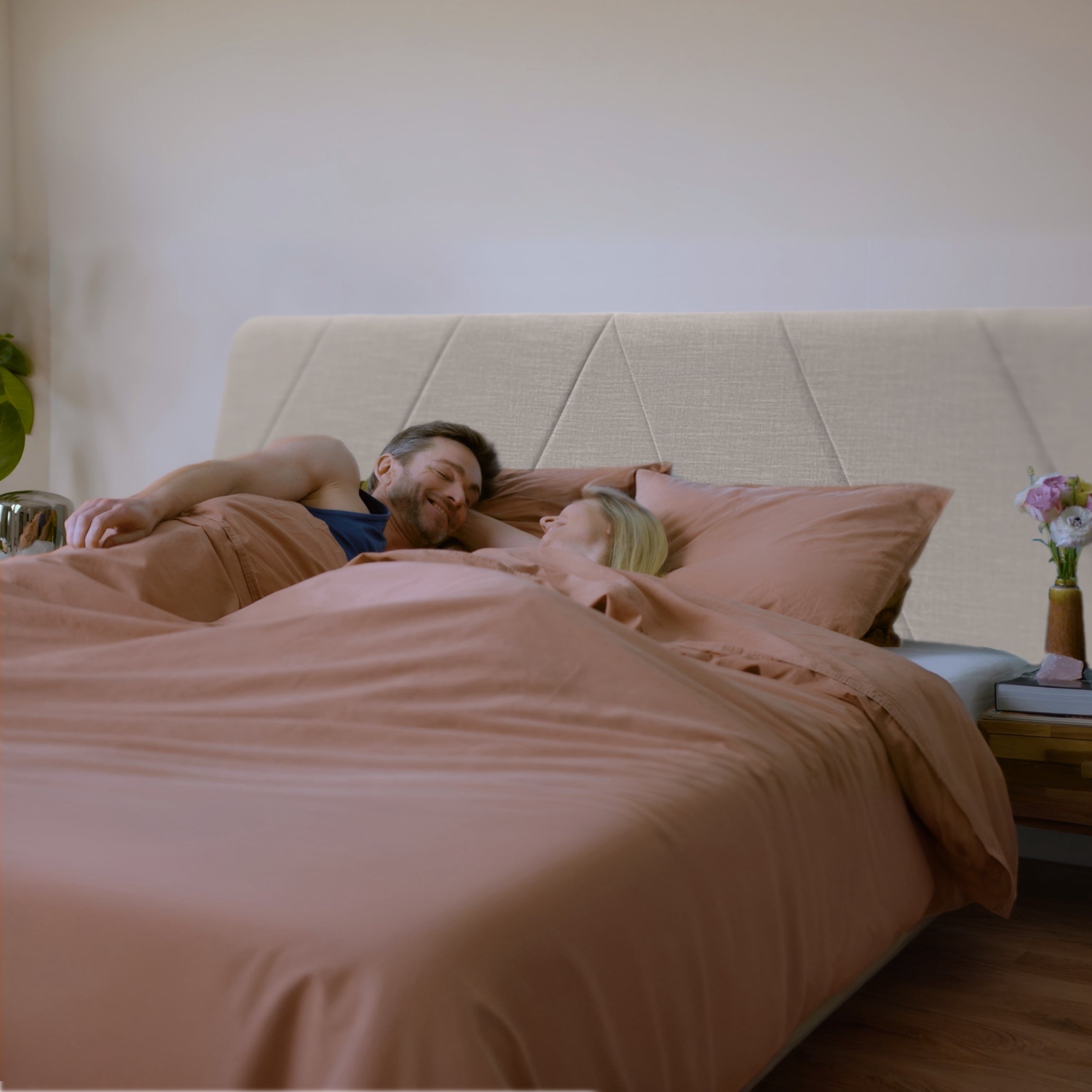
You Breathe 2,600 Gallons of Air While You Sleep.
Your body is completely still for 7–9 hours. Your lungs are not. While you sleep, you inhale 2,600 gallons of whatever air is immediately around your pillow—with no pause, no filter of your own, no break.
PM2.5 fine particles reach deep into your lungs. PM0.3 ultrafine particles pass through lung tissue into the bloodstream and trigger systemic inflammation. Dust mite proteins, mold spores, pet dander, and VOCs—all inhaled continuously, all night, every night.
This is why reducing exposure in a generic room sense is not enough. The only air that matters during sleep is the air within centimeters of your face. AirTulip controls exactly that air—and nothing else needs to be clean.